CBSE's OSM Rollout: What Actually Went Wrong, and Who Should Answer for It
CBSE's first full-scale Class 12 On-Screen Marking rollout wasn't a single error — it was a system that failed at every layer. From 68,000 rescanned answer books to a confirmed answer-sheet mismatch, here is what actually went wrong, who should answer for it, and what three specific demands students deserve instead of political theatre.
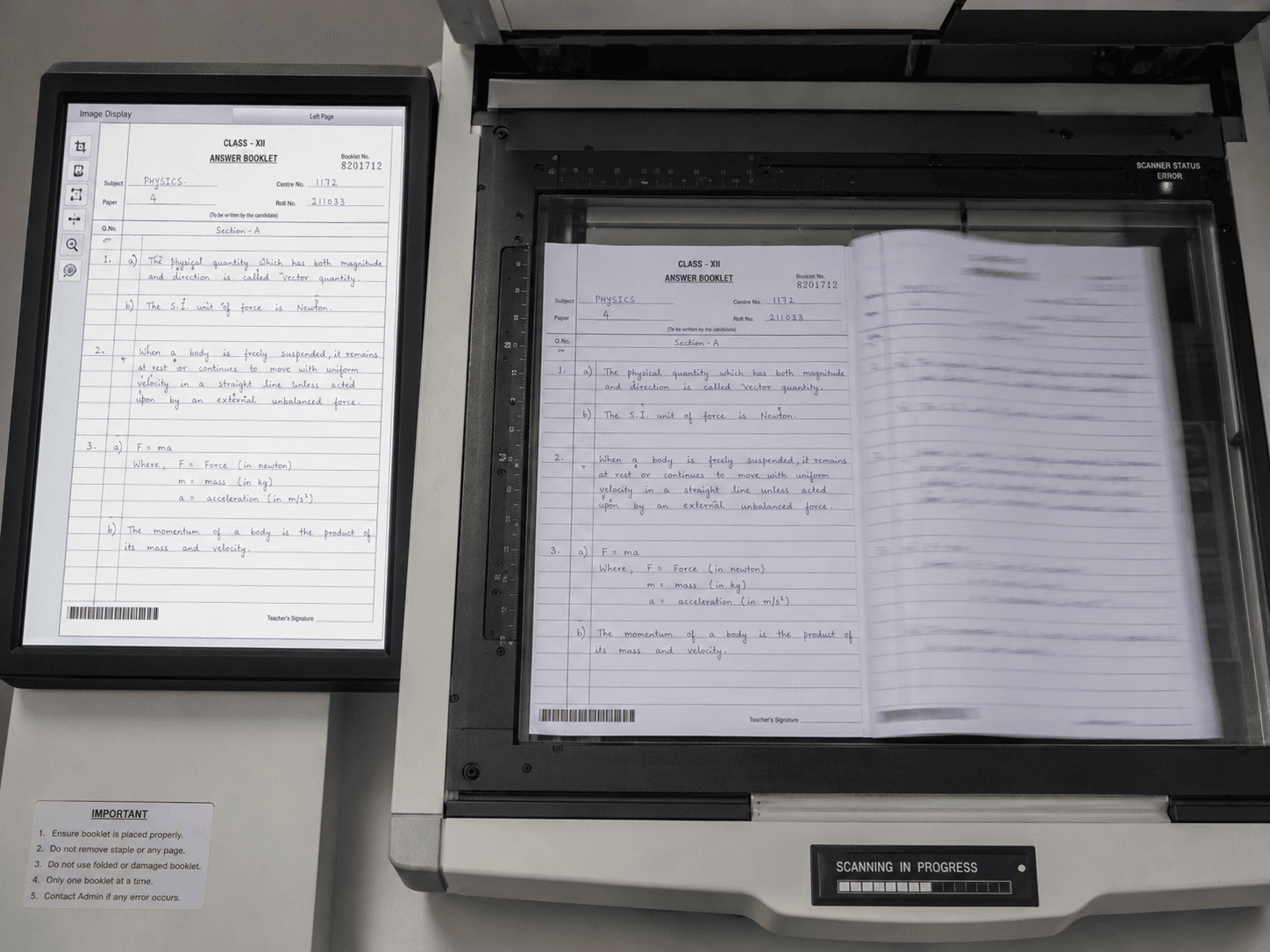
68,000 Rescanned Answer Books Later, Someone Finally Said Sorry.
When Union Education Minister Dharmendra Pradhan publicly accepted responsibility for the CBSE Class 12 On-Screen Marking controversy on May 28, he did the right thing. What the headlines haven't done is explain the actual failure chain — which matters enormously for the 14 lakh students still waiting on re-evaluation outcomes.
This was not one error. It was a system that failed at every layer.
CBSE's first full-scale Class 12 OSM rollout processed 98.66 lakh answer books across 70,000 evaluators and 88,000 computers. At that scale, even a low defect rate produces a large absolute number of harmed students. And the defect rate was not low.
68,018 answer books had to be rescanned due to poor image quality. 13,583 scripts with persistent scanning problems were shifted back to manual evaluation — effectively defeating the purpose of digitisation for those students. At least one answer-book mismatch was formally confirmed by CBSE: Vedant Shrivastava's Physics script was demonstrably not his. The post-result portal crashed under load, charged students incorrectly, and required IIT Madras, IIT Kanpur, and four public-sector banks to be deployed as emergency stabilisation.
The overall Class 12 pass percentage fell from 88.39% in 2025 to 85.2% in 2026.
The procurement question nobody is cleanly answering
CBSE awarded the OSM contract to COEMPT Edutech. Critics — including a parliamentary-level challenge from Rahul Gandhi — allege that tender criteria were progressively relaxed across multiple rounds to enable this vendor to qualify, with requirements on scan resolution, robotic scanning, and penalty structures reportedly softened. CBSE maintains it followed General Financial Rules. What makes this harder to dismiss is that COEMPT has documented links to a 2019 Telangana intermediate marks fiasco. The full tender file has not been publicly examined. This remains unresolved.
The whistleblower suppression problem
On March 16, CBSE issued a circular warning teachers involved in evaluation to refrain from sharing "misleading information" on social media. Evaluators had already encountered blurry scans and disappearing supplementary pages during live marking. The circular's practical effect was to suppress early defect escalation from the people best positioned to catch problems. This is an institutional culture failure that will outlast this controversy unless it is specifically addressed.
What accountability actually looks like
Pradhan taking responsibility is necessary but not sufficient. As of May 29, no IIT root-cause report has been publicly released. No quantified count of answer-book mismatches has been published. No procurement decision has been formally reviewed in the public domain. The re-evaluation portal has been postponed to June 1.
The students most at risk are those whose re-evaluation outcomes arrive after university admissions cutoffs. No student should lose a seat because the Board's remediation calendar is slower than the admissions calendar. That is the concrete demand worth making — not protests, not political point-scoring. A published IIT forensic report, a transparent tender review, and admission-safe re-evaluation timelines.
Those three asks are specific, measurable, and achievable. Everything else is noise.
Enjoyed this post?
Follow The Causal Observer to get notified of new posts.
Do you intend to write blog posts yourself?
Click hereHave a Question?
Please log in to ask the author directly.
Comments
No comments yet. Be the first to share your thoughts!