India Just Broke BRICS — And It Was Deliberate
At the April 2026 New Delhi summit, India single-handedly blocked a BRICS joint statement by pushing to remove references to East Jerusalem and soften anti-Israel language. This wasn't a diplomatic blunder — it was a calculated signal to the West. Here's what happened and why it matters.
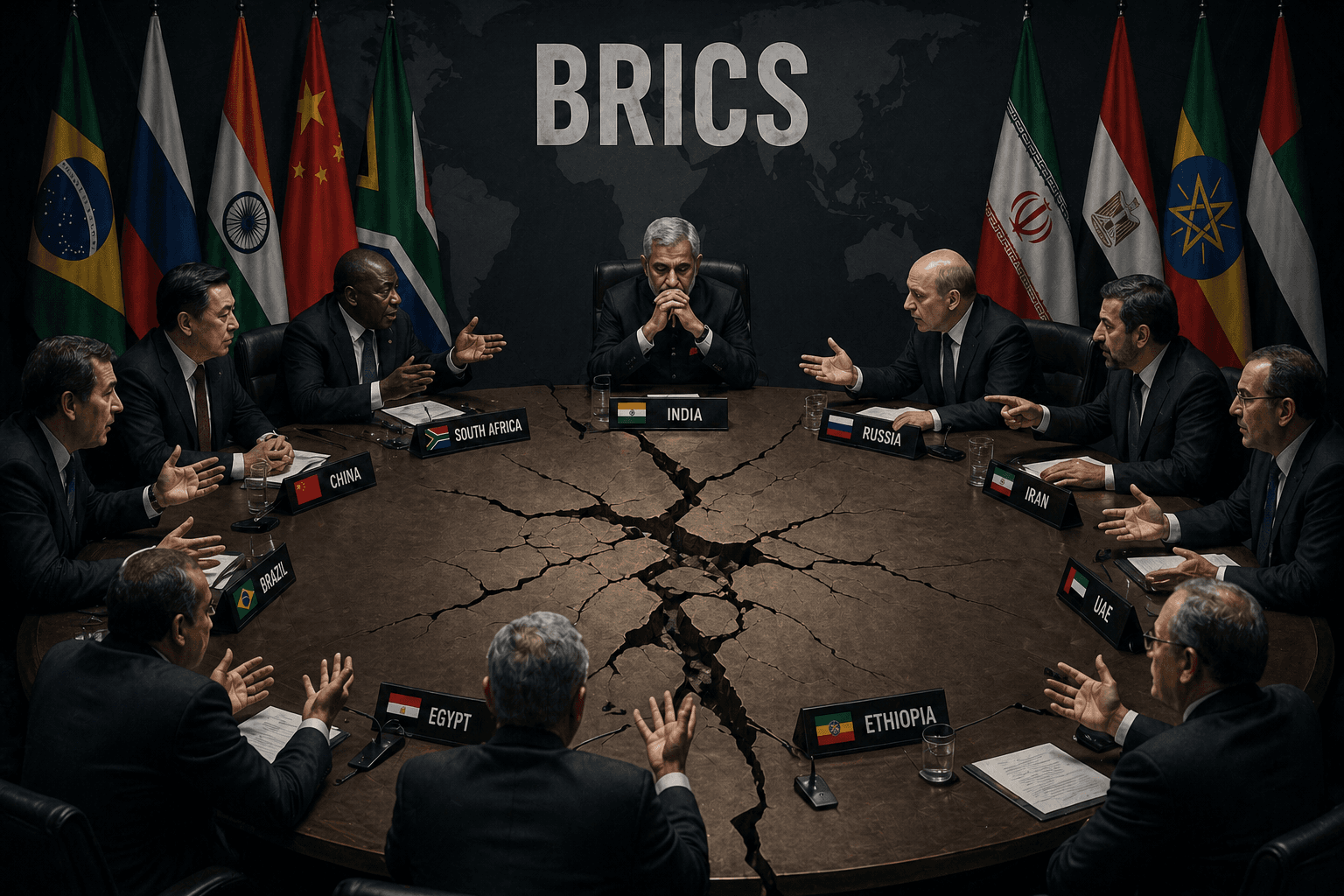
India Just Broke BRICS —And It Was Deliberate
New Delhi, April 23-24. Eleven nations. Two days of talks. Zero joint statement.
The BRICS Deputy Foreign Ministers meeting ended in a rare, embarrassing silence — and India engineered it.
What Happened
India holds the BRICS Presidency in 2026. As host, its job was to broker consensus. Instead, the Indian delegation walked into the room and started dismantling paragraphs that had already been agreed upon at the Kazan (2024) and Brasilia (2025) summits.
Three specific demands caused the breakdown:
Soften the language condemning Israel's military operations in Gaza and Lebanon
Remove all references to "East Jerusalem" as the capital of a future Palestinian state
Replace direct naming of "Israel" in West Bank condemnations with the generic phrase "occupying power"
Every other member pushed back. The joint statement was abandoned. India stood alone.
This Wasn't a Blunder
Here's what's easy to miss: India has been the loudest Global South voice for Palestinian rights for decades. This wasn't clumsiness — it was a calculated pivot.
The shift has been quietly building since 2017. Earlier this year, at the India-Arab League Summit in January 2026, references to East Jerusalem were also conspicuously absent. The Ministry of External Affairs is running a consistent, long-term policy update — and the BRICS room was just where it became impossible to hide.
The strategic logic is cold and clear. India's defense, technology, and intelligence relationship with Israel is worth far more to New Delhi than symbolic solidarity language in a multilateral declaration. And protecting that relationship signals something important to Washington: India's presence in non-Western forums will not automatically translate into anti-Western positions.
The Bigger Picture
BRICS has a structural problem now. The expanded bloc — which added UAE and Iran as members — has effectively imported the Middle East's sharpest rivalries into its own meeting rooms. UAE and Iran delegates were sparring openly throughout the summit, even before India's intervention.
Getting eleven nations with conflicting wars, sanctions regimes, and alliance structures to agree on West Asia language was already near-impossible. India simply decided to be the one that pulled the plug rather than sign something it didn't mean.
The cost is real: the BRICS Foreign Ministers meet on May 14-15, followed by the leaders' summit on September 10-11. Both are now under a cloud. India's BRICS Presidency year may be remembered as the one that cracked the bloc's consensus architecture.
Why It Matters for You
If you're tracking India's foreign policy, this is a landmark moment. The country is no longer performing non-alignment — it is actively choosing sides when the stakes are high enough, while maintaining the vocabulary of strategic autonomy.
BRICS gave India a platform. India just used that platform to tell the West: we're still with you where it counts.
This post is part of CausalBlogs' current affairs series. Follow for twice-weekly analysis on India's geopolitics, economy, and policy.
Enjoyed this post?
Follow The Causal Observer to get notified of new posts.
Do you intend to write blog posts yourself?
Click hereHave a Question?
Please log in to ask the author directly.
Comments
No comments yet. Be the first to share your thoughts!