The Strait That Could Break Your Budget
The U.S.-Iran talks collapsed in Islamabad. Twenty-one hours of negotiations, zero agreement. Here's why a waterway you've never visited is about to affect everything from your cooking gas to your EMI.
The Strait That Could Break Your Budget
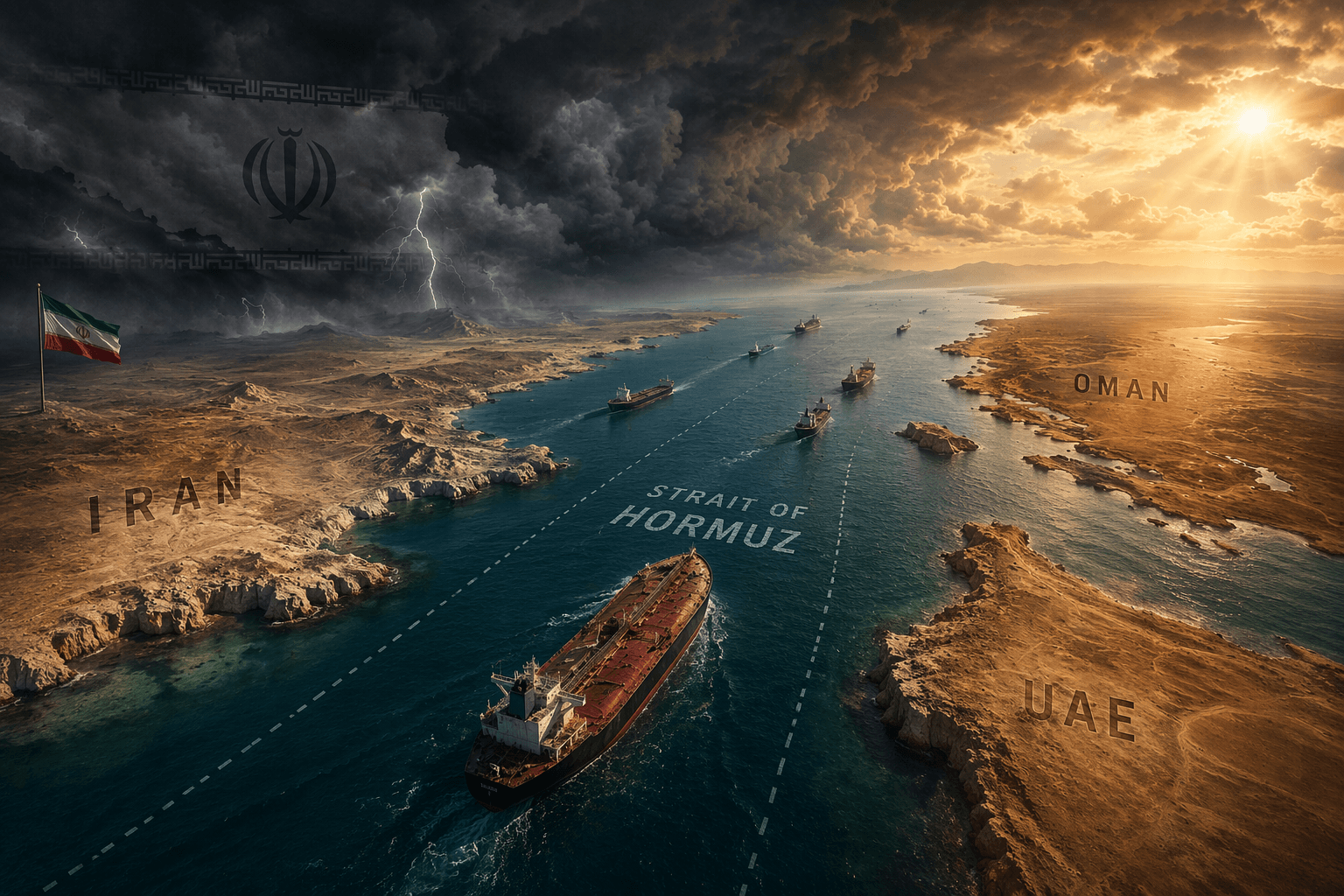
Picture a waterway so narrow that you could theoretically shout across it. Now imagine that 20% of the world's oil passes through it every single day. That's the Strait of Hormuz — and right now, it's the most dangerous chokepoint on the planet.
What Happened?
Twenty-one hours. That's how long American and Iranian diplomats sat across from each other in Islamabad on Sunday before walking out without a deal. The U.S., led by Vice-President J.D. Vance, said Iran refused to abandon its nuclear weapons programme. Iran blamed what it called "U.S. overreach." Pakistan, which hosted and mediated the talks, urged both sides to keep the ceasefire alive.
Neither side indicated what happens when the fragile two-week ceasefire expires on April 22.
Meanwhile, U.S. President Trump announced a naval blockade of the Strait of Hormuz the same evening. Iran's Revolutionary Guards responded by threatening to "deal severely" with any military vessel attempting to pass through.
The ceasefire is hanging by a thread.
Why It Happened?
This didn't start in Islamabad. Trace the causal chain back further.
On February 28, the United States and Israel launched strikes on Iran, killing Supreme Leader Ayatollah Ali Khamenei and triggering the war. Iran responded by effectively closing the Strait of Hormuz — its most powerful economic weapon. Nearly 20 million barrels of oil that normally flow through the strait daily stopped moving freely. Global oil prices shot to an all-time high of $144 per barrel.
The two sides entered Islamabad with fundamentally incompatible positions. Iran wants security guarantees, compensation for war damage, and the right to a civilian nuclear programme. The U.S. wants Iran to verifiably abandon any path to a nuclear weapon and reopen the strait unconditionally. These are not positions that close in 21 hours.
Israel complicates everything further. It has continued strikes on Lebanon, insisting the ceasefire does not apply there. Iran insists it does. This single disagreement nearly derailed the talks before they began.
Why It Matters to India?
India is the world's third-largest oil importer. Before this war, roughly 40% of India's LNG imports came from Qatar — through the Strait of Hormuz. India also imported significant crude from the Persian Gulf region through the same waterway.
The consequences are already visible. An Indian LPG tanker, Jag Vikram, made headlines simply for crossing the strait safely — that's how abnormal the situation has become. Domestic LPG prices are under pressure. The government has been prioritising household cooking gas supply, cutting industrial allocations. Workers in Haryana's auto hub Manesar staged protests over rising food costs linked to LPG shortages, forcing the state government to raise minimum wages by 35% overnight.
Now connect this to your wallet. Higher oil prices mean higher inflation. Higher inflation means the RBI is under pressure not to cut interest rates aggressively. That means your home loan EMI stays elevated longer. Your petrol costs more. Every product that moves by truck costs more to ship — and that cost lands on the price tag you see at the store.
The Causal Take
Here's what most coverage misses. India is not merely a spectator in this crisis — it is structurally exposed in a way that few other large economies are.
China has strategic petroleum reserves and long-term supply agreements that cushion the blow. Europe has LNG infrastructure and diversified suppliers. India is still building that resilience. The SHANTI Act, which opens India's nuclear energy sector to private investment, was passed precisely to reduce this fossil fuel dependency — but nuclear plants take a decade to build. The PM KUSUM solar scheme is nudging farmers toward solar irrigation to cut the subsidy bill — but that transition takes years.
In the short term, India's energy security rests on diplomatic agility — keeping channels open with Iran, the UAE, Qatar, Russia, and the U.S. simultaneously. External Affairs Minister Jaishankar visiting the UAE this weekend, Petroleum Minister Puri in Qatar last week — these are not coincidences. They are India doing what it must: buying time and supply while the big powers fight.
The Strait of Hormuz is 33 kilometres wide at its narrowest point. It is not India's strait. But its fate is very much India's problem.
When a waterway you cannot find on a classroom map starts deciding your grocery bill, you're living inside a geopolitics lesson — whether you signed up for it or not.
Acts in the Post
SHANTI Act (Sustainable Harnessing and Advancement of Nuclear Energy Act) Passed in December 2025. India's most sweeping reform of its civil nuclear sector. Opens nuclear energy to private participation for the first time. Also repealed the Atomic Energy Act of 1962 and the Civil Liability for Nuclear Damage Act of 2010. Significance: reduces India's long-term dependence on fossil fuel imports by building domestic nuclear capacity.
PM KUSUM (Pradhan Mantri Kisan Urja Suraksha evam Utthaan Mahabhiyan) A Central government scheme to solarise agricultural feeders and household rooftops. For farmers, it installs decentralised solar plants near agriculture-dominated substations, replacing expensive grid power. Broader goal: eliminate State governments' massive electricity subsidy bill — currently ₹2.4 lakh crore annually across India — by making solar cheaper than subsidised grid power
Enjoyed this post?
Follow The Causal Observer to get notified of new posts.
Do you intend to write blog posts yourself?
Click hereHave a Question?
Please log in to ask the author directly.
Comments
No comments yet. Be the first to share your thoughts!