Iran Crisis 2026 Explained: From the JCPOA Nuclear Deal to Operation Epic Fury and the Strait of Hormuz Standoff
From Vienna's diplomatic handshake to airstrikes on Tehran — this is the full story of how the Iran nuclear deal collapsed, sanctions crippled an economy, and a military offensive triggered the world's worst energy crisis in 50 years. Updated through April 23, 2026.
India-Germany Defence Roadmap
Defence Minister Rajnath Singh and his German counterpart, Boris Pistorius, recently met in Berlin to solidify a strategic defense partnership. The talks focused heavily on the co-development of military equipment and niche technologies, resulting in a signed Defence Industrial Cooperation Roadmap and a new arrangement for UN Peacekeeping Training.
View sourceE-Sports Registration Now Mandatory
Starting May 1, the Ministry of Electronics and Information Technology (MeitY) requires all e-sports games to register with the newly formed Online Gaming Authority of India (OGAI). While e-sports face mandatory compliance, the IT Secretary confirmed a "light-touch" approach where casual "online social games" currently remain exempt from this registration requirement.
View source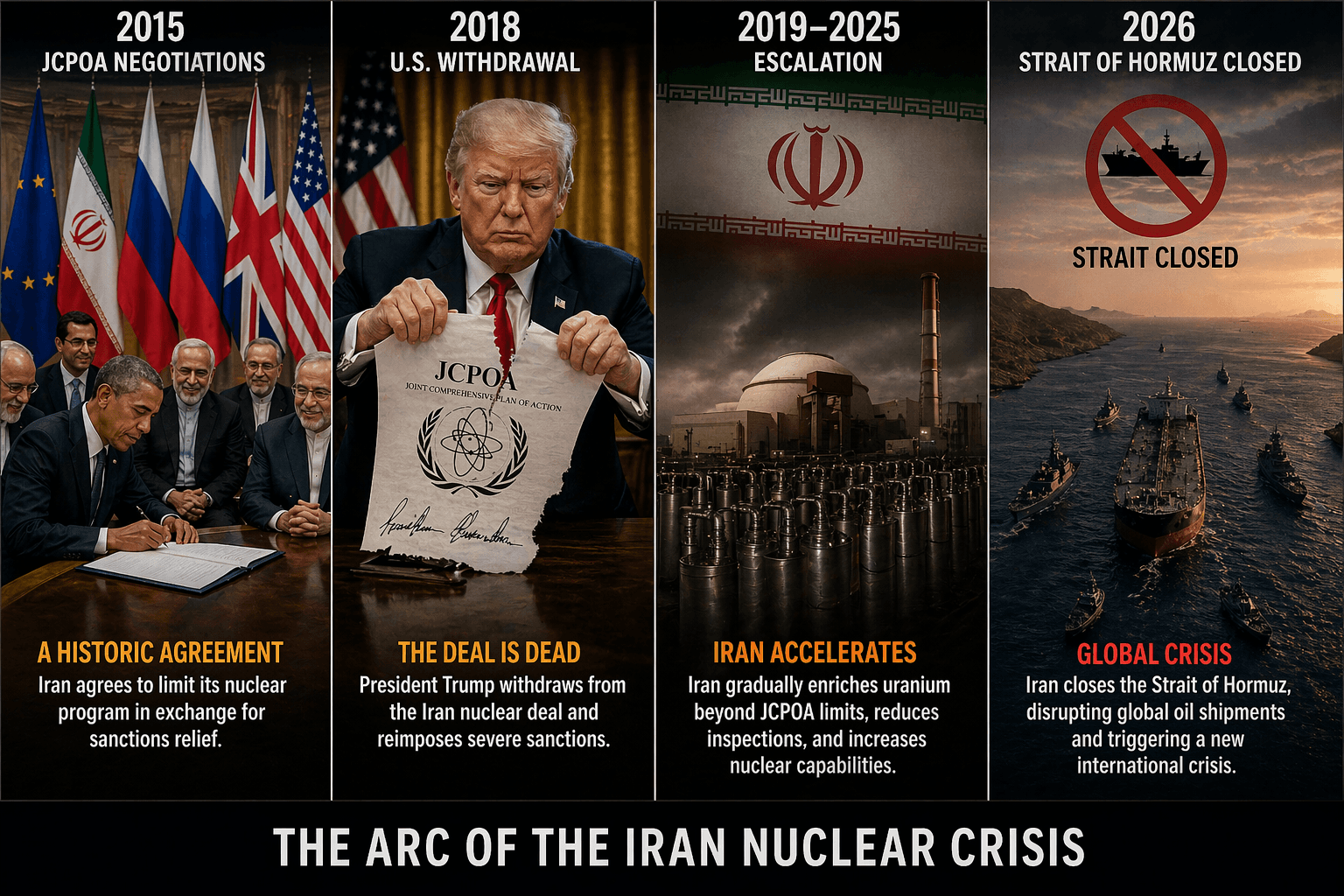
The Iran Crisis Explained: From the 2015 Nuclear Deal to the 2026 War and Ceasefire
Current Affairs | International Relations | April 23, 2026
The ongoing US-Iran-Israel conflict is one of the most consequential geopolitical events in decades. It directly affects global oil prices, shipping routes, and India's energy security. For competitive exam aspirants — SSC CGL, UPSC CSE, or GATE — this is a high-priority topic. Here is a clear, factual breakdown of how we got here and where things stand today.
Part 1: The JCPOA (2015) — What Was the Nuclear Deal?
Full name: Joint Comprehensive Plan of Action (JCPOA) Signed: October 18, 2015 | Implemented: January 16, 2016 Parties: Iran + P5+1 (USA, UK, France, Russia, China, Germany) + EU
What Iran Agreed To:
Reduce installed centrifuges from ~19,000 to 5,060 (IR-1 models only)
Cap uranium enrichment at 3.67% purity (far below weapons-grade 90%)
Reduce enriched uranium stockpile by 98% — capped at 300 kg for 15 years
Fill the Arak heavy-water reactor core with concrete, eliminating the plutonium pathway
Convert the Fordow underground facility from enrichment to a research center
Accept the most intrusive IAEA inspection regime in history — electronic seals, environmental sampling, daily facility access
What Iran Got in Return:
UN Security Council Resolution 2231 terminated previous sanctions
EU lifted all nuclear-related economic and financial sanctions
US suspended secondary sanctions — allowing foreign companies to trade with Iran
Access to $50–100 billion in previously frozen foreign exchange reserves held in South Korea, China, India, and Japan
Why It Was Fragile from the Start:
Iran's internal politics were deeply divided. President Hassan Rouhani and FM Mohammad Javad Zarif championed the deal as economic relief. But Supreme Leader Ali Khamenei and the IRGC (Islamic Revolutionary Guard Corps) were hostile to it. The IRGC had built vast smuggling monopolies during the sanctions years and actively sabotaged foreign investment contracts after the deal — blocking oil contracts and resisting Western companies — ensuring the promised economic boom never fully arrived. This gave hardliners ammunition to call the deal a betrayal.
Part 2: US Withdrawal and Maximum Pressure (2018)
On May 8, 2018, President Donald Trump withdrew the US from the JCPOA.
Trump's Key Objections:
Sunset clauses — Restrictions on centrifuges were set to expire between 2023 and 2030, after which Iran's nuclear capabilities would legally resume
Ballistic missiles excluded — The deal said nothing about Iran's missile program, which is the delivery system for a nuclear warhead
Proxy funding — Sanctions relief money was allegedly diverted to fund Hezbollah (Lebanon), Hamas (Gaza), and Houthi forces (Yemen)
The Maximum Pressure Campaign:
Revoked all oil import waivers for countries buying Iranian crude (India, South Korea, Japan, China)
Sanctioned the Central Bank of Iran and all affiliated institutions
Pressured SWIFT (the global banking messaging network, based in Belgium) to disconnect Iranian banks — effectively cutting Iran off from global commerce
Targeted IRGC-linked money laundering networks and shell companies
Result: Catastrophic collapse of the Iranian rial, hyperinflation, severe GDP contraction
Iran's Response — "Maximum Resistance":
The US withdrawal, despite Iran being in full JCPOA compliance (certified by IAEA), politically destroyed Iran's moderate faction. Khamenei's decades-long claim — that the US could never be trusted — was now proven correct. Iran shifted doctrine and began systematically breaching its own JCPOA commitments:
Exceeded the 300 kg cap on low-enriched uranium
Enriched uranium to 20%, then 60% purity (weapons-grade is 90%)
Deployed advanced IR-4 and IR-6 centrifuges, banned under the 2015 deal
The key lesson Tehran internalized: no US president can legally bind their successor to a treaty
Part 3: The 2026 War — Operation Epic Fury and Operation Roaring Lion
Background (2025):
June 2025: Israel launched the "Twelve-Day War" against Iran; the US struck Iranian nuclear facilities in "Operation Midnight Hammer," significantly damaging Iran's enrichment infrastructure
January 2026: Iranian security forces massacred thousands of civilians in a crackdown on pro-democracy protests — the largest since 1979
Nuclear talks between the US and Iran in early 2026 collapsed
By May 2025, Iran had enriched 408.6 kg of uranium to 60% purity — enough material (if further enriched) for an estimated 4–5 nuclear warheads. The IAEA declared Iran in material breach of the Non-Proliferation Treaty on June 12, 2025
The Offensive — February 28, 2026:
On the morning of February 28, 2026, the US (Operation Epic Fury) and Israel (Operation Roaring Lion) launched coordinated, large-scale preemptive strikes against Iran.
Scale of the opening phase:
Nearly 900 precision airstrikes in the first 12 hours
Over the 38-day major combat phase: Israeli Air Force conducted 10,800+ strikes on 4,000 targets; US carried out approximately 13,000 strikes
Supreme Leader Ali Khamenei was assassinated on February 28 in the initial wave
US Objectives (Operation Epic Fury):
Destroy Iran's offensive ballistic missile capabilities
Obliterate naval infrastructure
Dismantle the defense industrial base
Ensure Iran never acquires a nuclear weapon
Diplomatic demand: 20-year freeze on all enrichment + transfer of Iran's entire HEU stockpile to US custody
Israeli Objectives (Operation Roaring Lion):
Sever financial/logistical links to Iran's "Axis of Resistance" (Hezbollah, Hamas, Houthis)
Complete disarmament of Hezbollah in Lebanon
Achieve a formal peace agreement with the Lebanese government
Part 4: The Strategic Deadlock
The Decapitation Paradox:
Killing Khamenei created an unexpected problem. The only figure with the religious and political authority to enforce a ceasefire was now gone. Power devolved to radicalized IRGC remnants. Khamenei's son Mojtaba Khamenei — reportedly severely wounded and in hiding — became the hidden veto point in Iran's fractured leadership. Civilian politicians (President Pezeshkian, Parliament Speaker Ghalibaf) could not finalize any agreement without his consent, but contacting him risked revealing his location. Peace talks in Islamabad, mediated by Pakistan and involving US envoys JD Vance and Steve Witkoff and Iranian FM Abbas Araghchi, collapsed because the Iranian delegation lacked authority to seal any deal.
Iran's Asymmetric Response — The Strait of Hormuz:
Iran executed its most powerful deterrent: de facto closure of the Strait of Hormuz using anti-ship ballistic missiles, naval mines, UAV swarms, and IRGC fast attack craft. The Strait normally carries over 20 million barrels of crude oil per day — approximately 20% of global seaborne trade — plus massive LNG volumes.
Economic impact of the closure:
Global crude oil production dropped by 10.1 million barrels/day
Dallas Fed projections: if sustained for one quarter, Brent crude could exceed $132/barrel
US domestic fuel prices rose from $2.98 to over $4.11/gallon
Disruption of Qatari LNG exports hit Taiwan, Singapore, and Japan severely
IMF downgraded global growth forecasts; worst-case scenario: 2.0% growth + 5.4% inflation — near-recession territory
UNCTAD warned of an "existential threat" to emerging markets across agricultural, fuel, and fertilizer supply chains
The US Naval Blockade:
On April 12–13, 2026, President Trump ordered CENTCOM to implement a comprehensive naval blockade of all Iranian ports — targeting the 90% of Iran's economy dependent on maritime commerce. The US Navy executed right-of-visit boardings and seized non-compliant vessels. The blockade cost Iran an estimated $400 million per day. Iran called the blockade an "act of war" and a ceasefire violation.
Why the US Cannot Simply Win:
Ground operations risk American casualties — with US midterm elections in November 2026, even limited US military deaths would be politically catastrophic
Standoff airpower can degrade Iranian capability but cannot force a decentralized IRGC command structure to surrender
Iran's Hormuz closure holds the global economy hostage — sustaining the blockade and holding out for total capitulation bleeds the global financial system and risks a worldwide recession
Part 5: The Ceasefire — Where Things Stand Today (April 23, 2026)
Date | Development |
|---|---|
~April 8, 2026 | A fragile ceasefire declared, mediated by Pakistan |
April 11, 2026 | JD Vance, Steve Witkoff, Jared Kushner arrived in Islamabad for talks with Iranian FM |
April 12–13, 2026 | US imposed naval blockade despite ceasefire — Iran called it a violation |
April 13, 2026 | First round of Islamabad talks collapsed; no grand bargain reached |
April 21, 2026 | Trump extended the ceasefire deadline after Pakistan's request; Iran had not submitted a unified proposal |
April 22, 2026 | Iran fired on a container ship in the Strait; US seized an Iranian cargo vessel (M/V Touska) |
Current sticking points:
US demands: Complete denuclearization (zero enrichment), reopening of Strait of Hormuz, end to proxy militia funding
Iran demands: Lift the naval blockade, end Israeli strikes in Lebanon, war reparations, sovereignty recognition over the Strait
Lebanon complication: Israel excluded Lebanon from the ceasefire scope — Hezbollah attacks and Israeli counterstrikes are continuing, which Iran is using as justification to keep the Strait restricted
Iran's parliament speaker said Tehran will not reopen the Strait "as long as the US naval blockade remains" — a direct circular standoff
Key Terms for Exam Preparation
Term | Meaning |
|---|---|
JCPOA | Joint Comprehensive Plan of Action — 2015 Iran nuclear deal |
P5+1 | Five permanent UN Security Council members + Germany |
IAEA | International Atomic Energy Agency — UN nuclear watchdog |
IRGC | Islamic Revolutionary Guard Corps — Iran's elite parallel military |
SWIFT | Society for Worldwide Interbank Financial Telecommunication — global banking network |
Strait of Hormuz | Narrow waterway between Iran and Oman; 20% of global oil passes through it |
UN Resolution 2231 | UNSC resolution that endorsed and gave legal backing to the JCPOA |
Fordow | Fortified underground Iranian enrichment facility |
Arak | Iranian heavy-water reactor, now disabled under JCPOA |
HEU | Highly Enriched Uranium — above 20% purity; weapons-grade is 90%+ |
Maximum Pressure | Trump-era 2018 sanctions policy targeting Iran's economy after JCPOA exit |
Operation Epic Fury | US codename for the February 28, 2026 strikes on Iran |
Operation Roaring Lion | Israeli codename for the same coordinated offensive |
Operation Midnight Hammer | US strikes on Iranian nuclear sites in June 2025 |
Decapitation Paradox | Killing Iran's leadership removed the only figures who could authorize a ceasefire |
Quick Facts for MCQs
JCPOA enrichment cap: 3.67%
JCPOA stockpile cap: 300 kg for 15 years
Pre-deal Iranian centrifuges: ~19,000 → reduced to 5,060 IR-1 models
US withdrawal from JCPOA: May 8, 2018
Operation Epic Fury began: February 28, 2026
Khamenei's successor (de facto): Mojtaba Khamenei (son)
Pakistan's role: Ceasefire mediator
Strait of Hormuz: carries ~20% of global seaborne oil trade
Cost of war to US military as of March 19, 2026: ~$18 billion; Pentagon sought additional $200 billion
Iran assessed its own economic damage at: $300 billion to $1 trillion (as of April 11, 2026)
Enjoyed this post?
Follow The Causal Observer to get notified of new posts.
Do you intend to write blog posts yourself?
Click hereHave a Question?
Please log in to ask the author directly.
Comments
No comments yet. Be the first to share your thoughts!